Data Sovereignty As a Real
Competitive Advantage
- EU-compliant security and regulatory standards
- Full control over your own data
- Less legal uncertainty and lower risk
- Greater independence and trust


Why data sovereignty is now business-critical
-

Transparency instead of a black box
Visibility into where security-relevant data is processed, which responsibilities apply and how your protection fits within regulatory European frameworks to prevent hidden compliance gaps and loss of control over sensitive data.
-

Customer and partner trust
Meet the requirements with enterprise customers and public sector organizations that expect proof of data sovereignty and compliance in accordance with European regulations.
-

Ensure business continuity
Keep business-critical applications compliant with regulations preventing costly, high-pressure migrations.
-

Strategic independence
Build long term resilience, control and improved planning through a compliant set-up that prevents fines and legal actions, forced changes to your infrastructure or losses of certifications or contracts.
Technology is global. Compliance is not.
EU vs. USA – A Data Sovereignty Comparison
Why legal jurisdiction between the EU and US matters
Unified standard through the General Data Protection Regulation
Fragmented laws (e.g., California Consumer Privacy Act)
Strong user and corporate rights
Different company policies
Strict barriers
Broadened access possibilities (e.g., Cloud Act)
Strict and clear privacy policies
Less stringent data protection standards
European solutions such as GAIA-X
Dominance of large US tech providers
Unified rules across the EU market
Different rules by federal state
Clear transfer regulations (EU-US Data Privacy Framework)
Inconsistent regulations
Secure, controllable, transparent and future-proof
Companies no longer invest in cybersecurity solely to protect themselves from attacks. A modern, Europe-aligned security architecture also creates stability, decision-making clarity, and trust within the digital business environment.
- Greater legal certainty through alignment with European data protection and compliance standards
- Less organizational friction through clearer security and governance structures
- Strategic independence through reduced reliance on non-EU compliant global providers
- Easier audits and assessments for data protection, compliance, and certifications
- Better decision-making foundations for provider and architecture choices
What a European security alternative should deliver
A convincing alternative needs more than just technology and features. It should combine security, performance, compliance capability and decision transparency to reduce operational burden for companies in everyday practice.
- Less friction between IT, data protection, compliance, and procurement
- Stronger arguments for tenders and audits
- Lower strategic dependency on non-European platforms
- Greater trust among customers, partners, and internal stakeholders
- Future-ready architecture for digital business models in Europe
Security services that combine protection and sovereignty
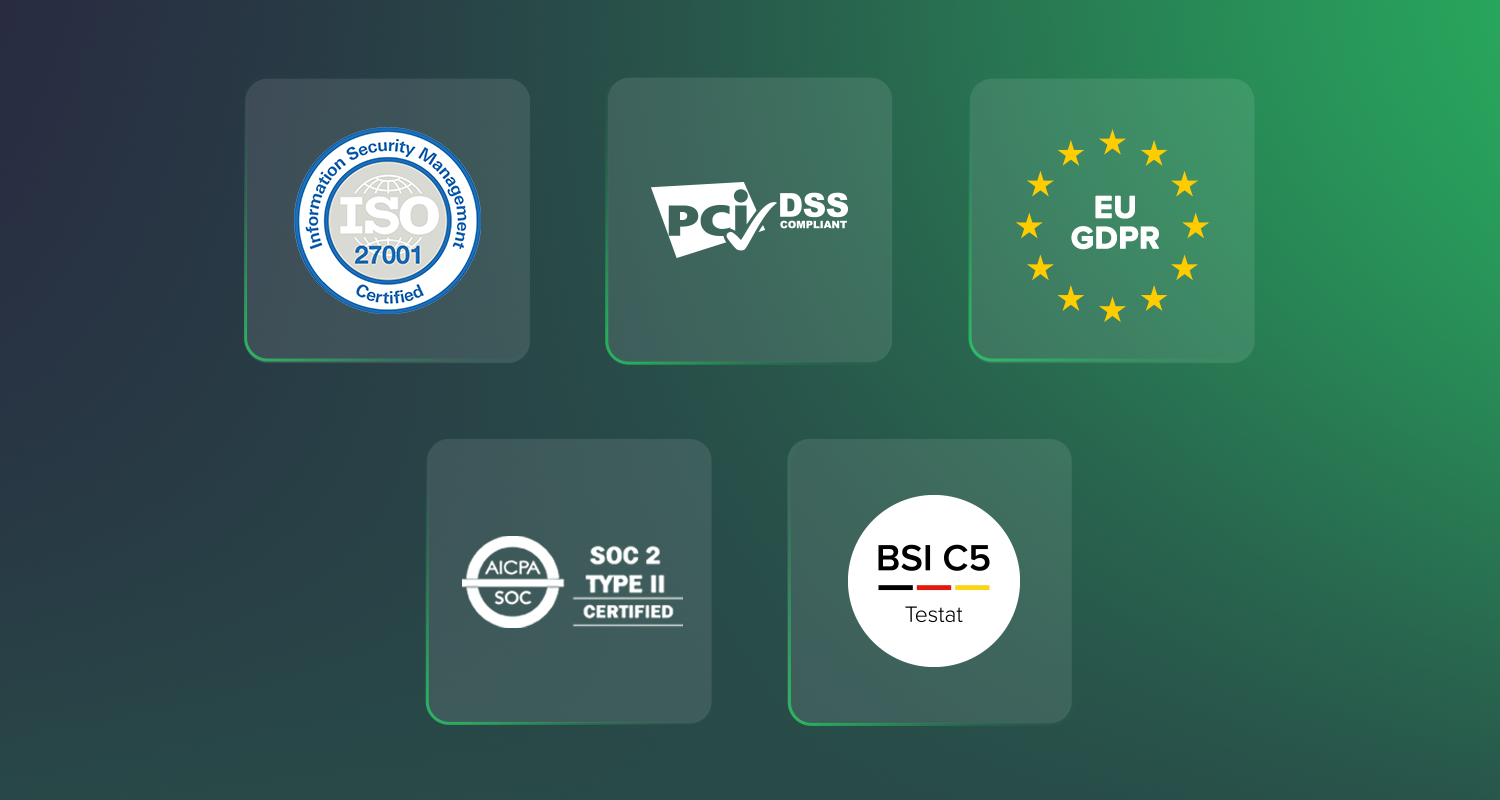
A modern security platform must reliably defend against attacks, maintain performance for digital services and at the same time fit into a governance model that is sustainable within Europe. Our Made in Germany solutions are certified and KRITIS-tested, GDPR-compliant and auditable for a maximum competitive edge.
-

DDoS Protection
Protect critical services and public applications even during massive attack volumes, ensuring availability does not become a matter of chance.
Learn more -

WAAP & WAF
Secure web applications against modern threats and reduce attack surfaces at the application level.
Learn more -

API Security
Maintain control over the interfaces that today’s digital business models rely on.
Learn more -

Secure DNS
Strengthen the resilience of your domain name system and minimize risks within a frequently underestimated critical layer.
Learn more -

Secure CDN
Improve performance, availability, and user experience without ignoring governance considerations.
Learn more -

Layer-2 Backbone
You can rely on our proprietary Layer 2 backbone, which ensures that all your data always stays where it belongs.
Learn more
You might also like:
Don’t base your security decision solely on features. Consider future-proofing as well.
FAQ
Everything you need to know about Data Sovereignty
-
What does Data Sovereignty mean?
Data sovereignty describes the ability of companies and organizations to retain full control over their data. This includes determining where data is stored, who has access to it, and which legal frameworks apply.
For European companies, data sovereignty often means that data is stored within the EU and processed according to European data protection law.
-
Why is Data Sovereignty particularly sensitive for security services?
Because security services operate very close to data traffic. Anyone who filters requests, detects attacks, or protects web applications potentially processes highly sensitive information. Therefore, not only features matter, but also legal jurisdiction, governance, and transparency.
-
What is the difference between EU data protection and US data protection?
The main difference lies in the legal structure of data protection.
EU:
- Strict data protection laws such as the GDPR
- High requirements for data security and transparency
- Strong rights for affected individuals
USA:
- No unified federal data protection law
- Multiple sector-specific regulations
- Authorities may request access to data under certain laws
These differences are a key reason why data sovereignty is important when using cloud services.
-
Are US providers fundamentally unsuitable?
No. Many US providers are technologically strong. However, for European organizations the additional question is how well the operating model aligns with their own compliance, data protection, and sovereignty strategies.
-
What is the concrete advantage of a European-oriented security architecture?
You gain greater control over provider risks, simplify coordination with data protection and compliance teams, and create a stronger foundation for long-term strategic decisions. Companies such as Link11 act as a proven alternative to align security architectures with strict European legal requirements.
-
Is this topic only relevant for large corporations?
No. Medium-sized companies with digital business processes, customer data, or regulatory requirements particularly benefit from considering security and governance together from the outset.
-
Is this only about compliance?
No. It is equally about operational resilience, trust, controllability, and the ability to operate digital services under stable and manageable conditions over the long term.
-
What is a sovereign cloud?
A sovereign cloud is a cloud infrastructure where data and systems are operated so that:
- Data is stored within the EU
- It is subject to European legislation
- Access and operations are controlled by European organizations
The goal is maximum data sovereignty, security, and regulatory compliance.
-
How can companies improve their Data Sovereignty?
Companies can strengthen their data sovereignty by:
- Using cloud providers with data centers in the EU
- Implementing clear data classification and governance
- Using end-to-end encryption
- Applying strict access and authorization concepts
- Conducting regular compliance audits
These measures help ensure long-term data control and protection.
-
Why is Data Sovereignty becoming increasingly important for companies?
With growing digitalization, cloud usage, and international data flows, data sovereignty is becoming a strategic factor for security, compliance, and trust.
Companies that secure control over their data can:
- Reduce regulatory risks
- Strengthen customer trust
- Future-proof their digital infrastructure
-
What is the US Cloud Act?
The US Cloud Act (Clarifying Lawful Overseas Use of Data Act) is a US law from 2018. It allows US authorities to request access to data from US companies — even if that data is stored on servers outside the United States.
This means that if a European company uses a US cloud provider, its data could theoretically fall under US jurisdiction.
-
What is Privacy Shield?
Privacy Shield was an agreement between the EU and the USA regulating the transfer of personal data from EU citizens to US companies. Participating companies had to comply with specific data protection and transparency requirements. The goal was to ensure an adequate level of data protection for transfers to the United States.
However, in July 2020 the European Court of Justice declared the agreement invalid because the level of data protection in the US did not meet EU standards and EU citizens lacked sufficient legal protection against government access to their data.
-
What is the Cyber Resilience Act?
The Cyber Resilience Act (CRA) is an EU regulation establishing binding cybersecurity requirements for products with digital elements. Its goal is to improve the security of hardware and software throughout their entire lifecycle and better protect consumers and companies from cyberattacks.
Manufacturers will be required to fix vulnerabilities faster, provide updates, and increase transparency about security risks.
The Cyber Resilience Act is part of the EU cybersecurity strategy and aims to ensure a uniformly high security level for digital products in the European single market.